What Is Digital Marketing? 5 Simple Guide to Growing Your Business Online
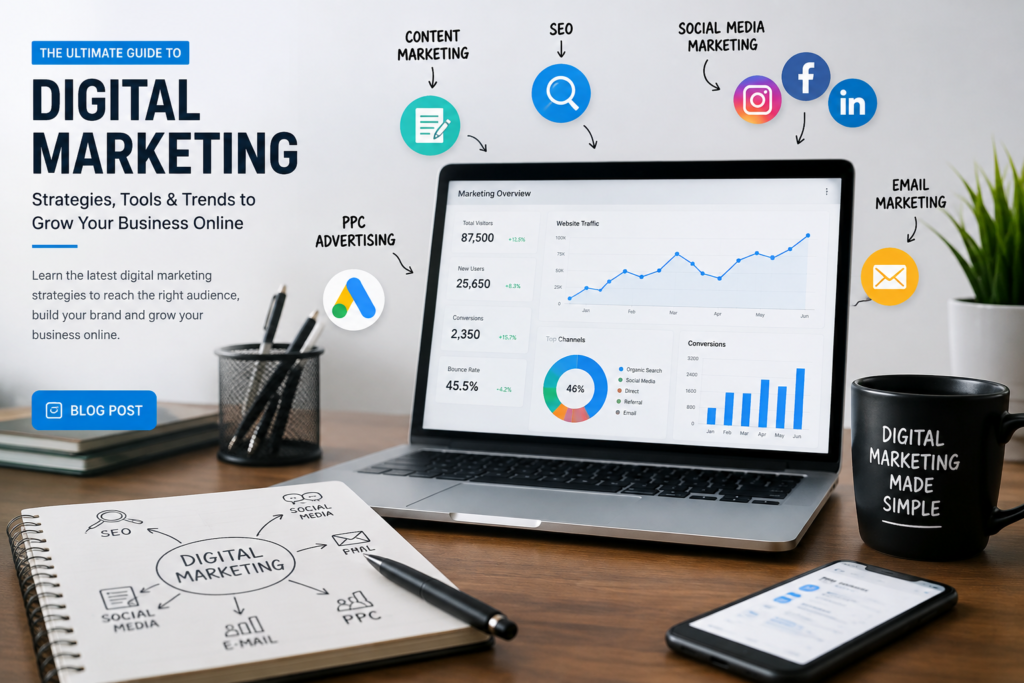
What is digital marketing ? Digital marketing is the process of promoting a business, product, or service through online platforms and digital technologies. It includes channels such as search engines, social media platforms, websites, email marketing, mobile applications, and online advertising. By using digital marketing strategies, businesses can connect with their target audience, increase brand awareness, generate leads, and drive sales. Unlike traditional marketing methods, digital marketing provides measurable results, allowing businesses to track performance, understand customer behavior, and continuously improve their campaigns for better returns.
Whether you’re a small business owner, entrepreneur, or student, understanding digital marketing can help you attract customers, increase sales, and grow your brand online.
If you are wondering what is digital marketing is and how can help your business
Today’s consumers spend a significant amount of time online—searching for products, reading reviews, watching videos, and engaging on social media. Digital marketing helps businesses:
- Reach a global or local audience.
- Generate quality leads.
- Increase brand awareness.
- Improve customer engagement.
- Track campaign performance.
- Maximize your return on investment (ROI).
Key Components of Digital Marketing
Search Engine Optimization (SEO)
Benefits:
- Drives consistent organic website traffic.
- Enhances brand credibility and online visibility.
- Provides sustainable, long-term growth.
- Improves user experience and website performance.
Example:
A local clothing store optimizes its website for keywords such as “affordable fashion in Kochi” to attract customers searching for nearby apparel.
Content Marketing
Content marketing focuses on creating and sharing useful, informative, and engaging content that meets the needs of your target audience. High-quality content helps educate potential customers, build trust, and encourage them to take action.
Benefits:
- Increases audience engagement and website traffic.
- Builds authority and trust within your industry.
- Supports SEO by targeting relevant keywords.
- Generates quality leads and improves customer retention.
- Common content formats include:
- Blog articles
- Videos
- Infographics
- E-books
- Podcast
Benefits:
- Builds authority.
- Educates customers.
- Improves SEO.
- Generates leads.
Social Media Marketing (SMM)
Businesses use platforms such as Facebook, Instagram, LinkedIn, X, and YouTube to connect with their audience.
Activities include:
- Sharing posts
- Running paid advertisements
- Responding to customer queries
- Building online communities
- Benefits:
- Increases brand awareness.
- Drives website traffic.
- Boosts customer engagement.
Pay-Per-Click (PPC) Advertising
PPC is a paid advertising model where businesses pay only when someone clicks on their ad.
Examples include:
- Google Search Ads
- Facebook Ads
- Instagram Ads
- LinkedIn Ads
- Benefits:
Immediate visibility.
Highly targeted campaigns.
Measurable results.
Email Marketing
Email marketing involves sending newsletters, promotional offers, and personalized messages to subscribers.
Benefits:
- Builds customer relationships.
- Encourages repeat purchases.
- Cost-effective marketing channel.
Affiliate Marketing
Affiliate marketing allows businesses to partner with individuals or websites that promote their products in exchange for a commission on sales.
Benefits:
- Expands reach.
- Low upfront investment.
- Performance-based payment.
Influencer Marketing
Brands collaborate with influencers who have loyal followers on social media.
Benefits:
- Builds trust quickly.
- Reaches niche audiences.
- Increases product visibility.
How Digital Marketing Works
A successful digital marketing strategy typically follows these steps:
- Identify your target audience.
- Set clear marketing goals.
- Create valuable content.
- Choose the right digital channels.
- Launch marketing campaigns.
- Measure results using analytics.
- Optimize campaigns for better performance.
Benefits of Digital Marketing for Business Growth
Cost-Effective
Digital marketing often requires a lower budget than traditional advertising while offering better targeting.
Better Targeting
Businesses can target audiences based on:
- Age
- Location
- Interests
- Online behavior
- Purchase history
Measurable Results
Tools like website analytics and ad dashboards help businesses monitor:
- Website traffic
- Click-through rate (CTR)
- Conversion rate
- Customer acquisition cost (CAC)
- Return on investment (ROI)
Higher Customer Engagement
Businesses can interact with customers through:
- Social media comments
- Live chat
- Email campaigns
- Online reviews
Increased Sales
Effective digital marketing helps businesses reach the right audience, generate quality leads, and turn them into loyal customers.
Digital Marketing Channels at a Glance
Channel
- Main Goal
- SEO
- Increase organic website traffic
- Content Marketing
- Educate and attract customers
- Social Media Marketing
- Build brand awareness and engagement
- PPC Advertising
- Generate immediate traffic and leads
- Email Marketing
- Nurture customer relationships
- Affiliate Marketing
- Increase sales through partners
- Influencer Marketing
- Build credibility and reach new audiences
- Tips for Beginners
- Learn the basics of SEO.
- Create high-quality, useful content.
- Maintain an active social media presence.
- Build an email list from day one.
- Use analytics to measure performance.
- Test different marketing strategies and improve continuously.
- Focus on providing value to your audience rather than only promoting products.
- Common Digital Marketing Mistakes to Avoid
- Ignoring your target audience.
- Publishing inconsistent or low-quality content.
- Neglecting mobile-friendly website design.
- Failing to track campaign performance.
- Relying on only one marketing channel.
- Giving up before seeing long-term results.
Conclusion
What is digital marketing ? Digital marketing is a key driver of business growth in today’s competitive marketplace. By using strategies such as SEO, content marketing, social media marketing, PPC advertising, email marketing, affiliate marketing, and influencer marketing, businesses can attract more customers, build stronger relationships, and increase revenue. For beginners, the key is to start with clear goals, understand your audience, create valuable content, and continually analyze and improve your campaigns. With consistency and the right strategy, digital marketing can help businesses of any size grow successfully in the digital age.
